
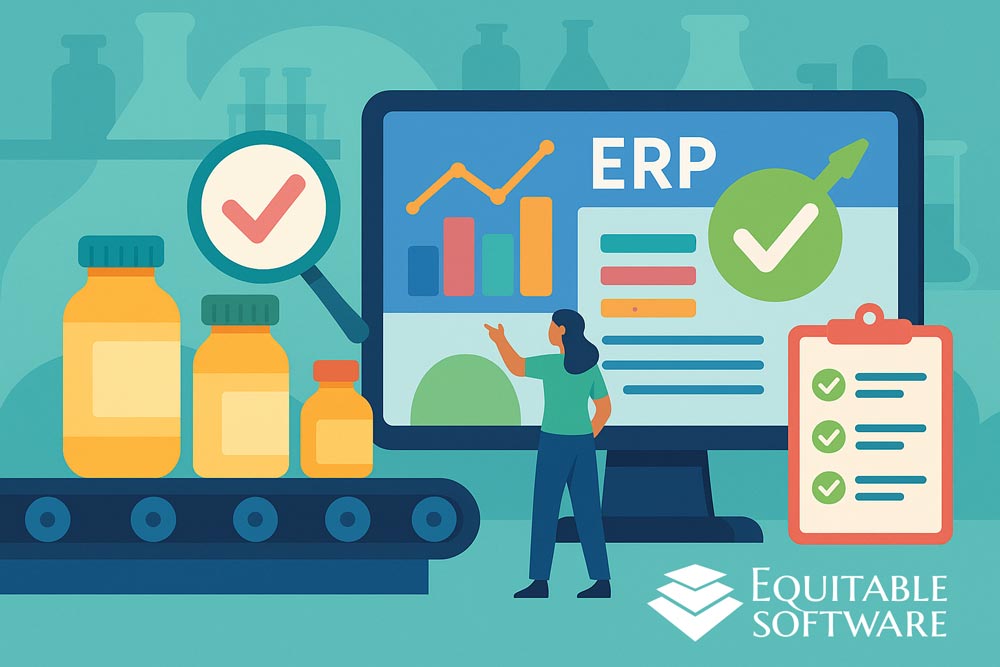
In the ever-evolving world of dietary supplements, quality control isn’t just a regulatory requirement—it’s a brand imperative. As consumer expectations grow and compliance standards tighten, supplement manufacturers must ensure that every capsule, tablet, and powder that leaves their facility meets the highest standards of safety, efficacy, and consistency.
Enter the role of integrated Enterprise Resource Planning (ERP) systems. When designed specifically for the supplement industry, ERP solutions provide a powerful framework for managing and maintaining quality control from raw materials to final product distribution.
Why Quality Control Matters More Than Ever
The dietary supplement market is booming, but it’s also under intense scrutiny. Regulatory bodies like the FDA enforce strict compliance with Current Good Manufacturing Practices (cGMP), and retailers demand documentation proving product safety and integrity. A single slip-up—whether it’s a mislabeled ingredient, a contamination issue, or improper documentation—can damage brand reputation and lead to costly recalls or penalties.
To mitigate these risks, supplement manufacturers need tools that support transparency, traceability, and accountability throughout the production process.
How ERP Systems Strengthen Quality Control
An ERP system designed for supplement manufacturing offers an integrated approach to managing the entire lifecycle of a product. Here’s how:
1. Automated Batch Record Management – Manual batch records are prone to human error and time-consuming audits. ERP systems automate batch documentation, linking each ingredient and process step to a specific lot number. This creates a digital audit trail that ensures accountability and makes FDA inspections much smoother.
2. Ingredient Traceability – From sourcing to shipment, ERP software tracks every ingredient back to its origin. This traceability is crucial for identifying potential contamination sources or verifying ingredient claims (e.g., allergen-free, non-GMO, organic).
3. Real-Time Quality Checks – Integrated ERP systems allow for in-process quality checks, ensuring specifications are met at every production stage. Whether it’s verifying weight uniformity in capsules or testing moisture levels in powders, deviations are flagged in real-time, enabling immediate corrective action.
4. SOP & cGMP Compliance – ERP platforms can embed Standard Operating Procedures (SOPs) into daily workflows, ensuring that teams consistently follow established processes. These systems also ensure that documentation aligns with cGMP standards, reducing the risk of regulatory violations.
5. Automated Non-Conformance Management – When a product or process doesn’t meet quality standards, ERP systems initiate corrective and preventive actions (CAPA) workflows. These tools help document issues, assign responsibilities, and ensure resolution, all within a unified system.
The Competitive Advantage of Integrated Quality
Beyond compliance, ERP-enabled quality control fosters operational efficiency and customer confidence. Manufacturers can detect issues early, reduce waste, shorten production cycles, and improve product consistency—all of which translate into higher profitability and stronger brand loyalty.
For customers, transparency and trust are everything. ERP systems help you deliver both.
Ready to elevate your quality standards?
In an industry where quality can make or break a brand, supplement manufacturers can’t afford to rely on disjointed systems or outdated manual processes. An integrated ERP system tailored to the supplement industry is not just a back-office tool—it’s a frontline defense for quality, compliance, and customer satisfaction. We understand the unique challenges supplement manufacturers face and can provide solutions. Our ERP solutions are purpose-built to help you take control of your quality processes and build a foundation for scalable growth.
Contact us to learn how our ERP system can work for you.